Rewarding the Regular
Bringing rhythm to a scattered mobile experience.
The Problem
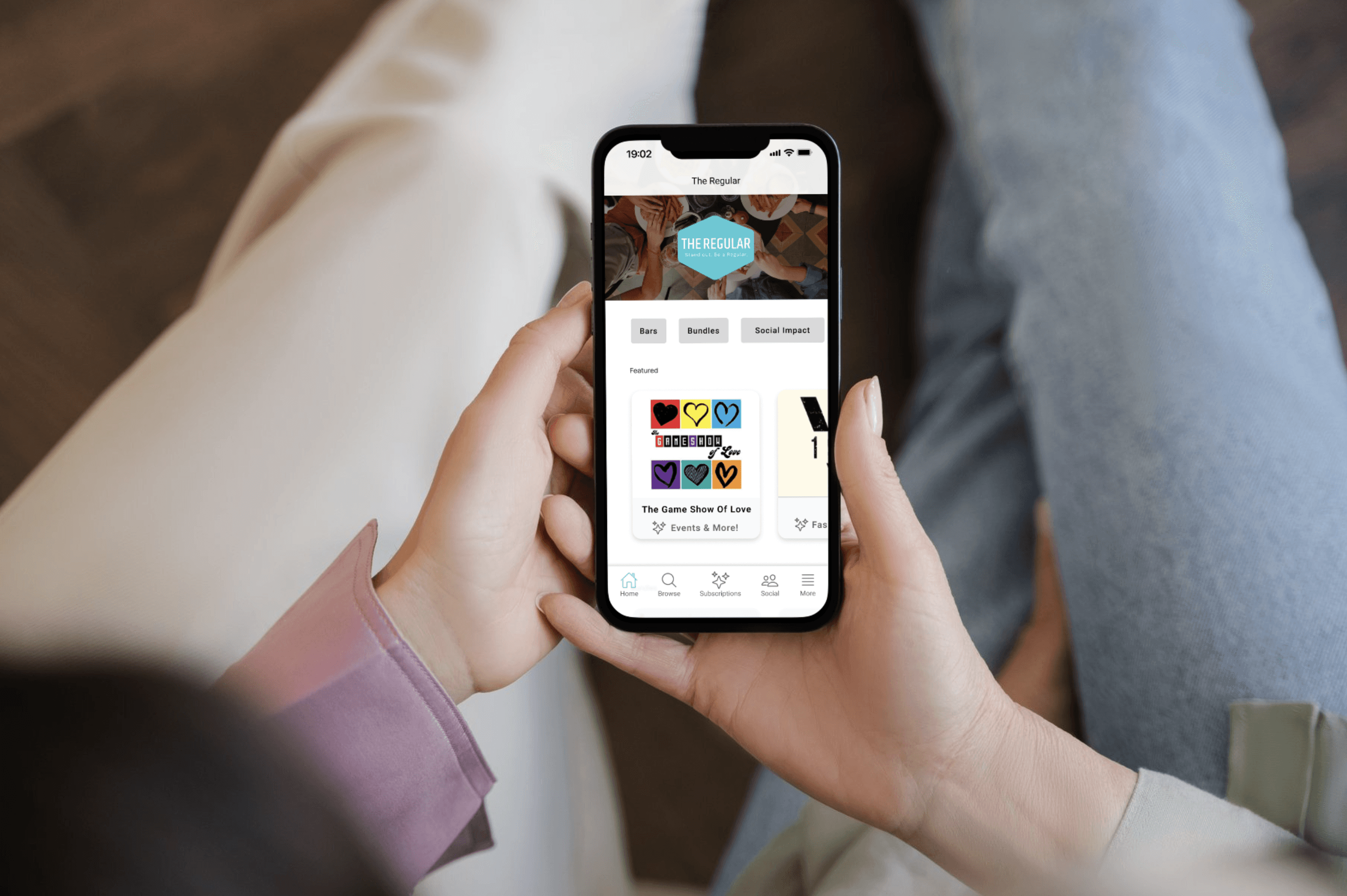
Leading the design team and research efforts, I worked on The Regular, a startup mobile app that connects local businesses with customers. The product had already launched in beta, but the app had some issues.
User adoption was low and parts of the experience were difficult to use. My goal was to improve retention and clarify the platform's value.
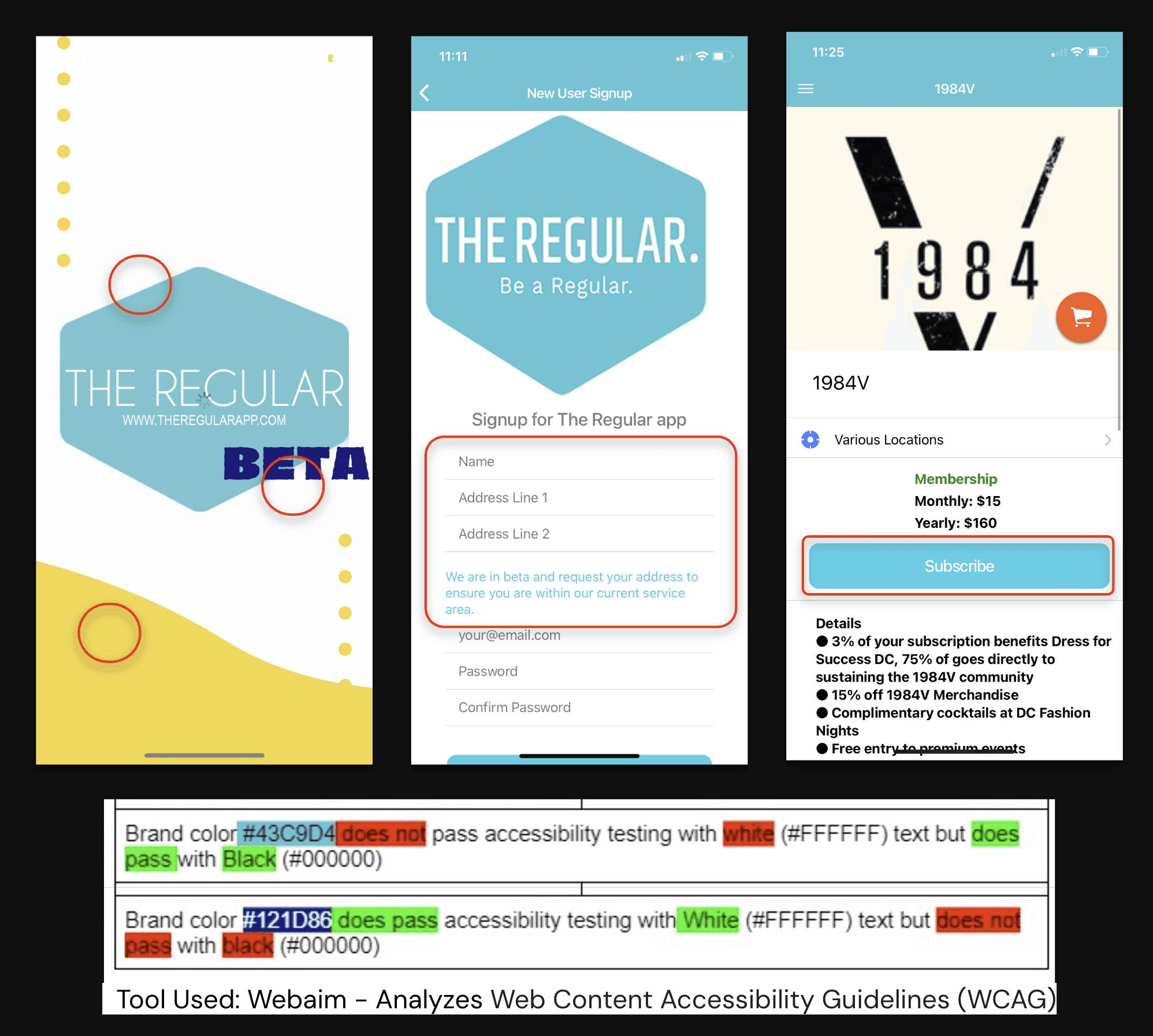
My team and I started with a usability and accessibility audit to familiarize ourselves with the beta app and better understand what specifically was causing users to struggle.
Research
We ran usability tests with participants recruited through the company host and asked users to complete guided and unguided tasks. We observed where they struggled and synthesized our findings as a final deliverable.
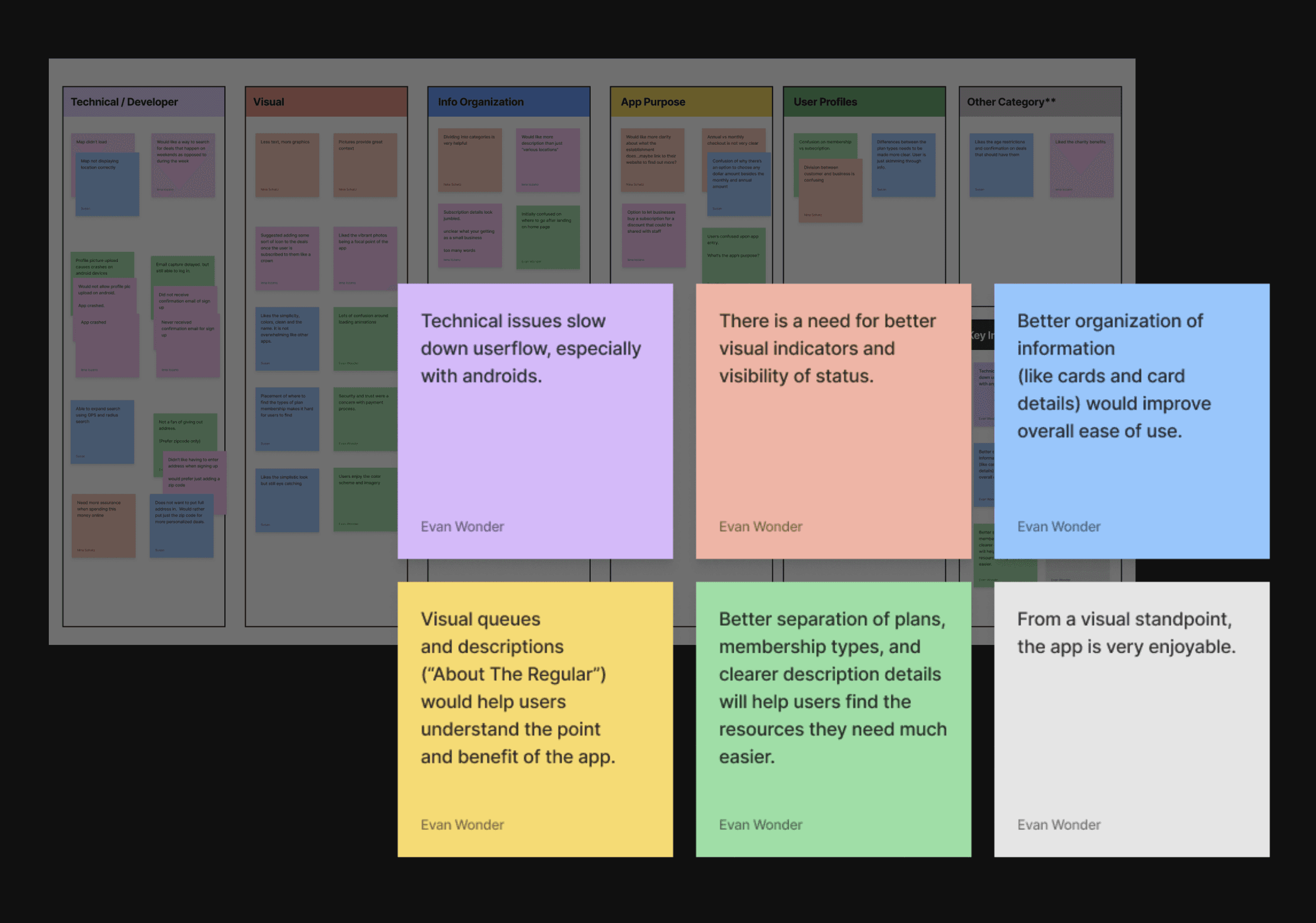
High level discoveries:
New users didn’t understand the app’s purpose on first open
Confusion in sign-up, profile setup, and payment flows
Poor navigation made it hard to know where they were
Membership vs. subscription offerings were unclear
Lack of feedback caused doubts about data security
Crashes and black screens disrupted users experience
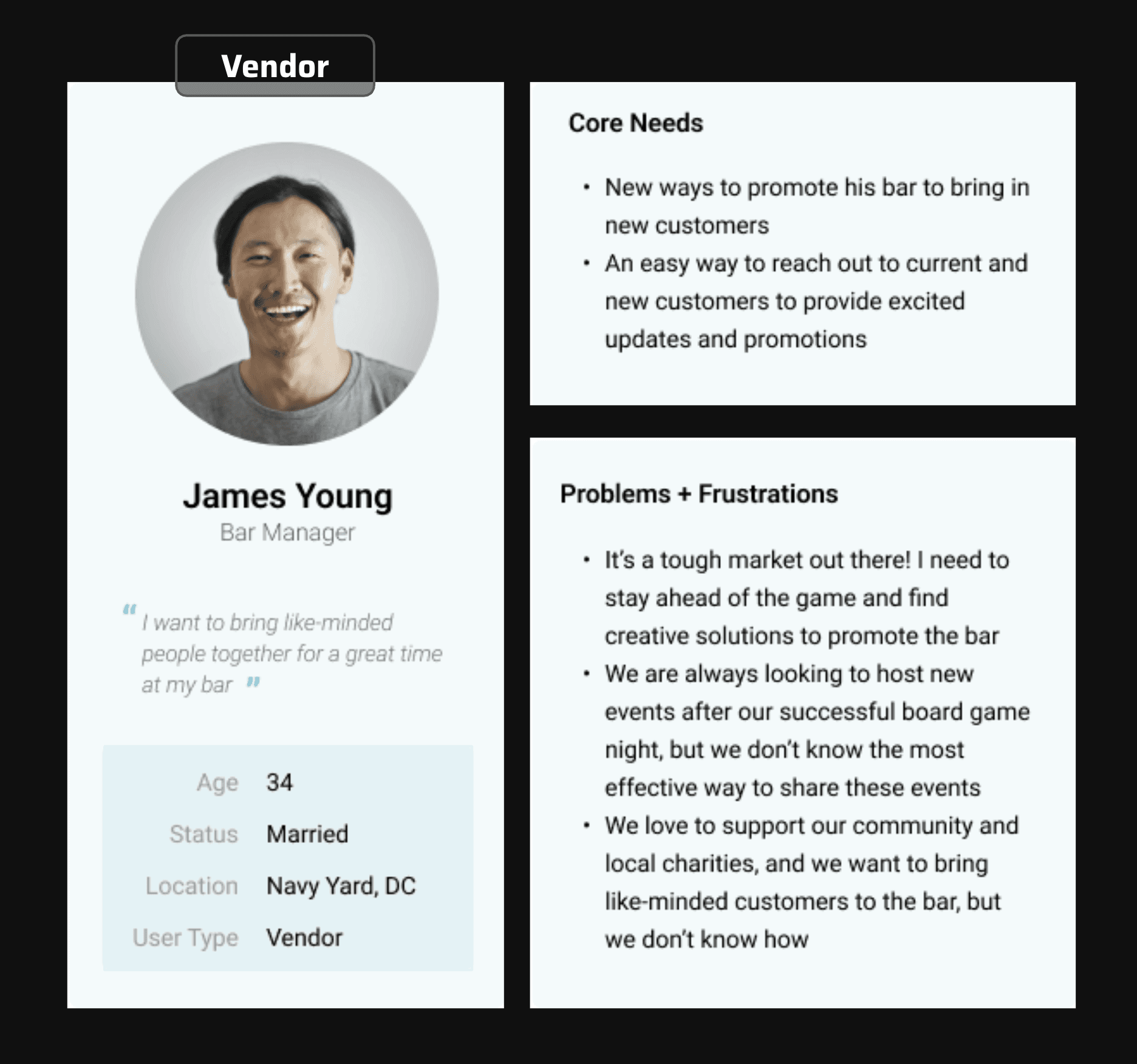
Personas
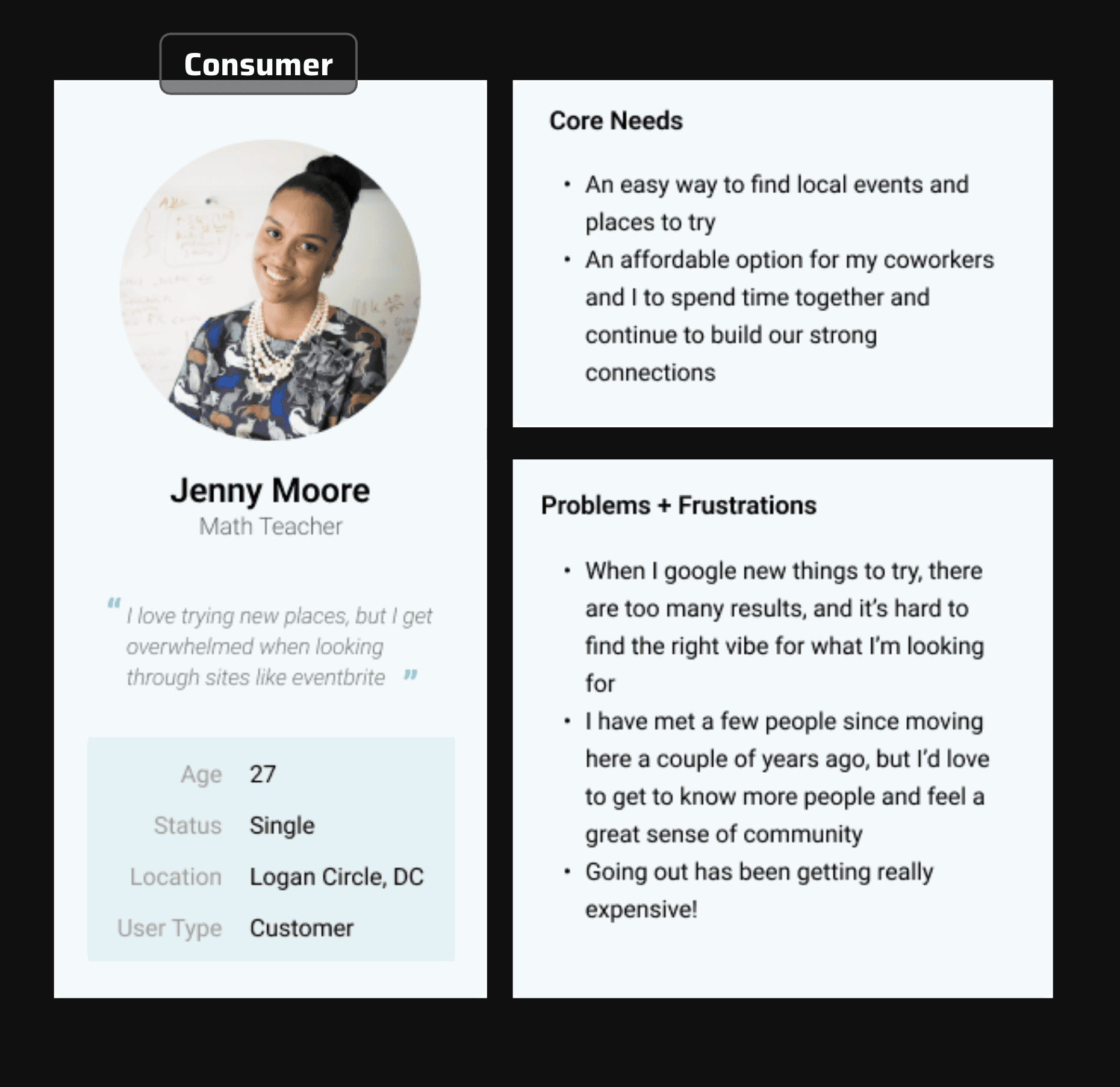
After identifying consumers and vendors as the main user types, we synthesized our findings into personas to capture their essence and develop a targeted approach to meeting their needs.
Strategy
Using the research findings and personas, we began reconstructing the entire app screen by screen. My focus was improving how users understand the product and move through it.
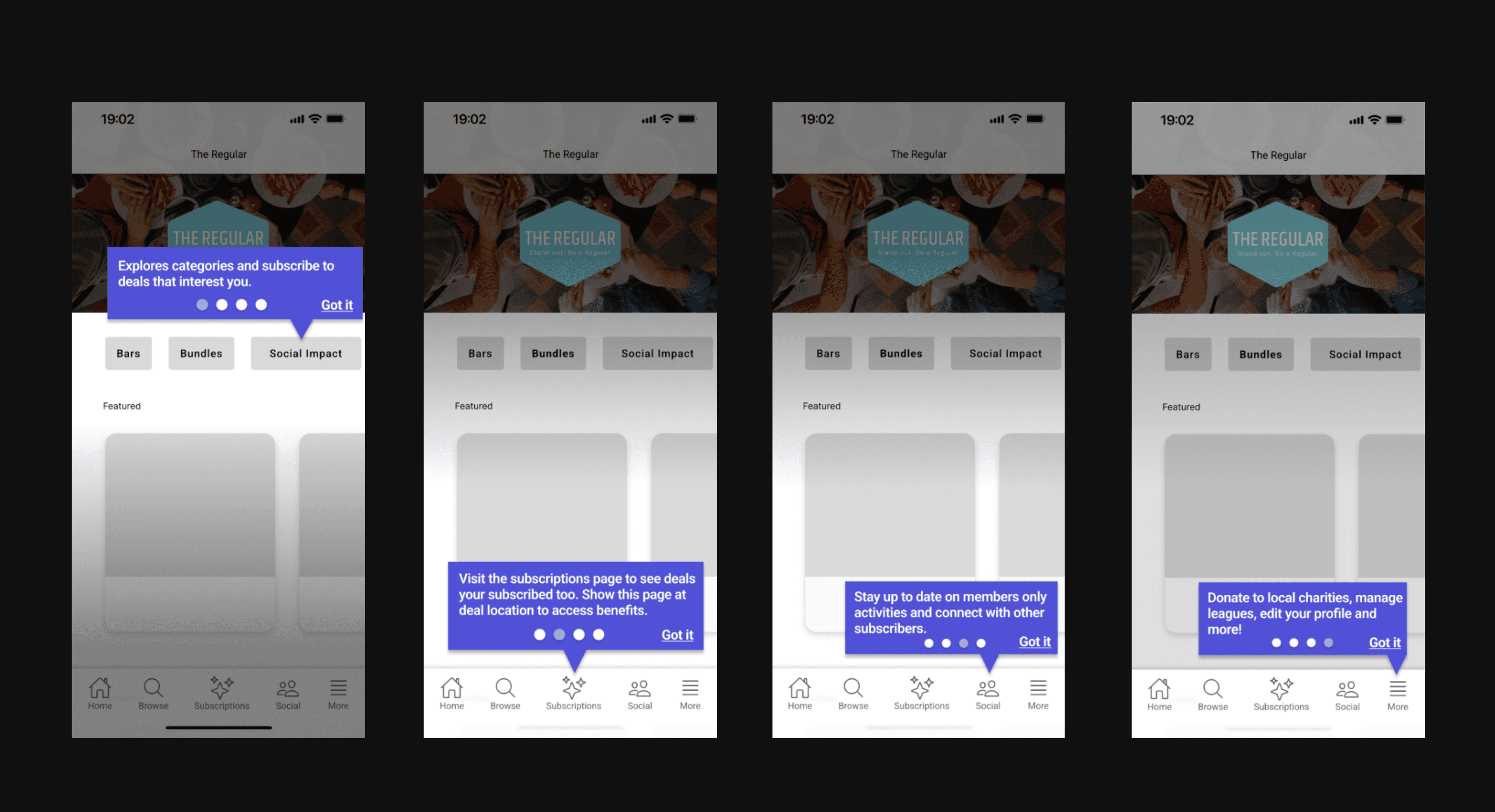
[A] System Strategy
Clarify onboarding so users immediately understand value and actions
Restructure and clean up navigation
Add progress indicators for key flows like sign-up
Separate membership from account data
Split sign-up flows for consumers vs. vendors
Tailor experiences based on user type
[B] Visual Strategy
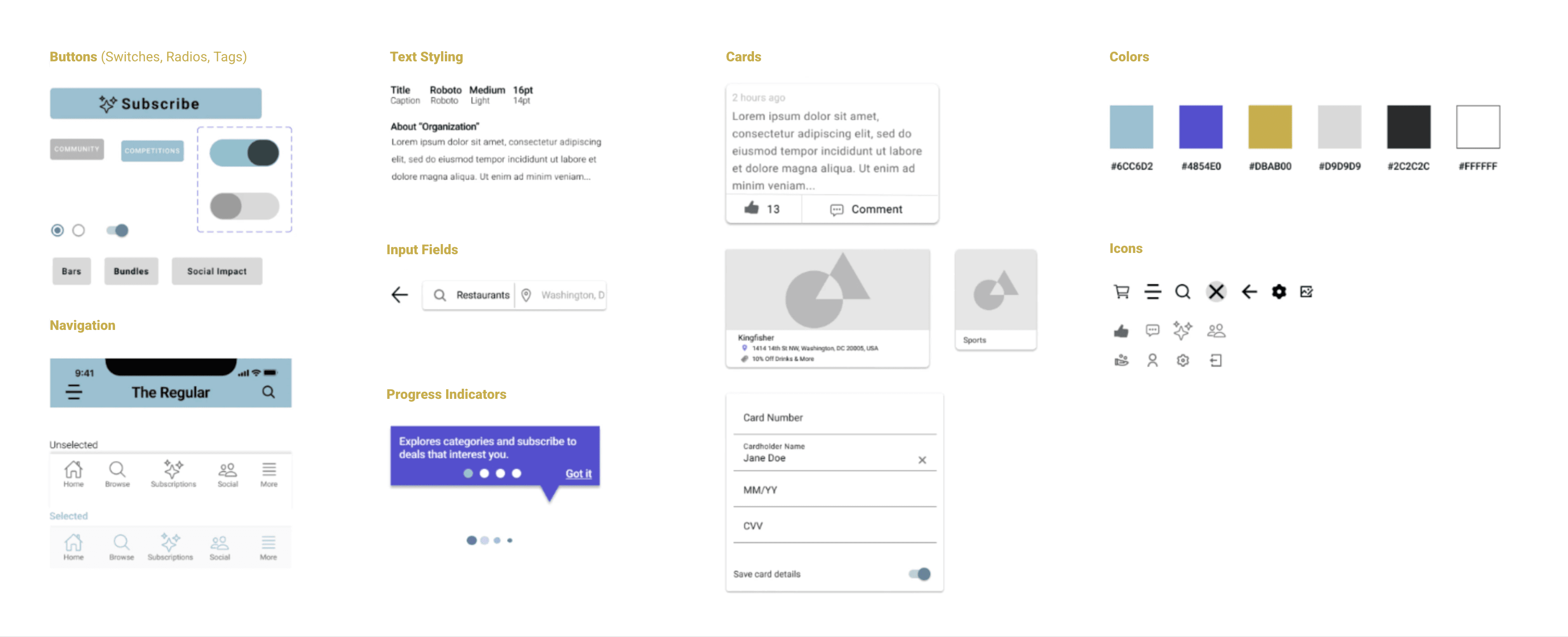
As part of our strategy, I created a modified, accessible style guide, along with new components, as a starting design system that the company could expand as they grew. This was used to keep the team organized and bring coherence to the company's existing styles.
Design
[A] Onboarding + Guidance
To address the confusion around The Regular's purpose, I redesigned the early app experience to introduce the platform more clearly and guide people through their first steps.
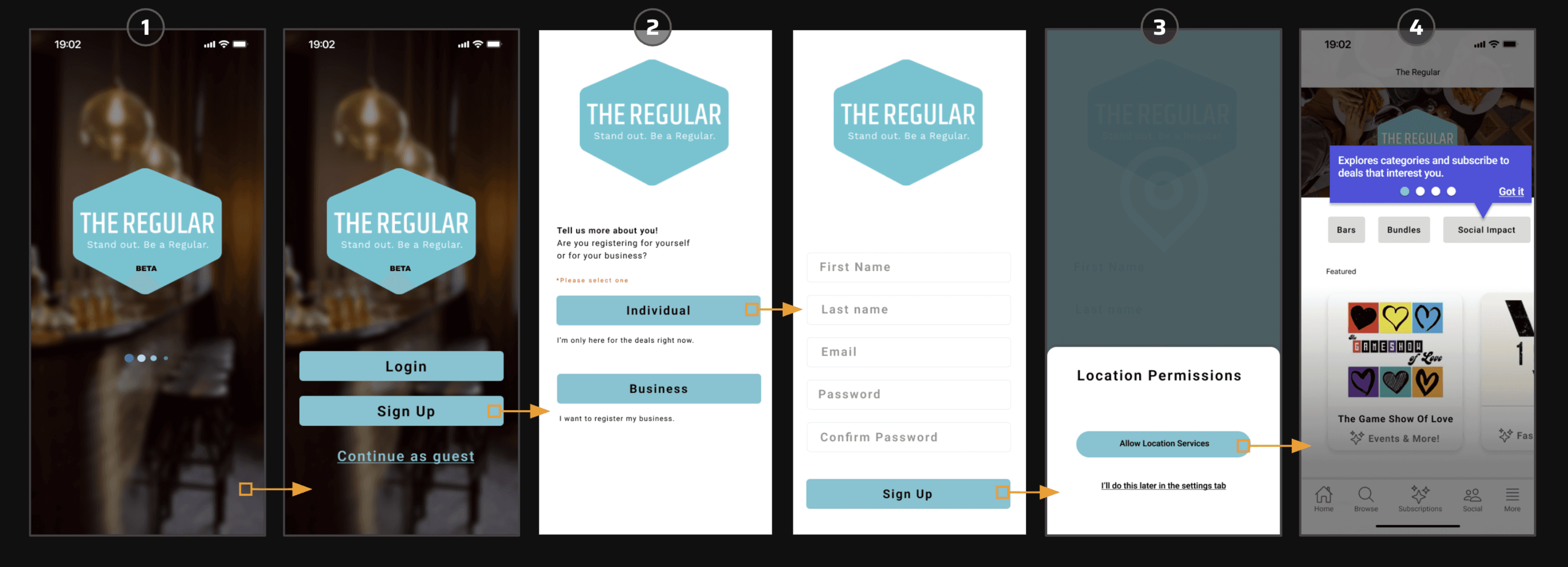
Key changes included:
An informative loading screen that introduces the product
Separate sign-up flows for vendors and consumers
Location permissions prompt to simplify capturing user locality
A guided onboarding process with visual progress indicators
These changes helped users understand what the app offers and gave them a tailored path when creating an account.
[B] Navigation & control
Testing showed that users had trouble finding features and managing their account. I redesigned core areas of the app to make them more streamlined.
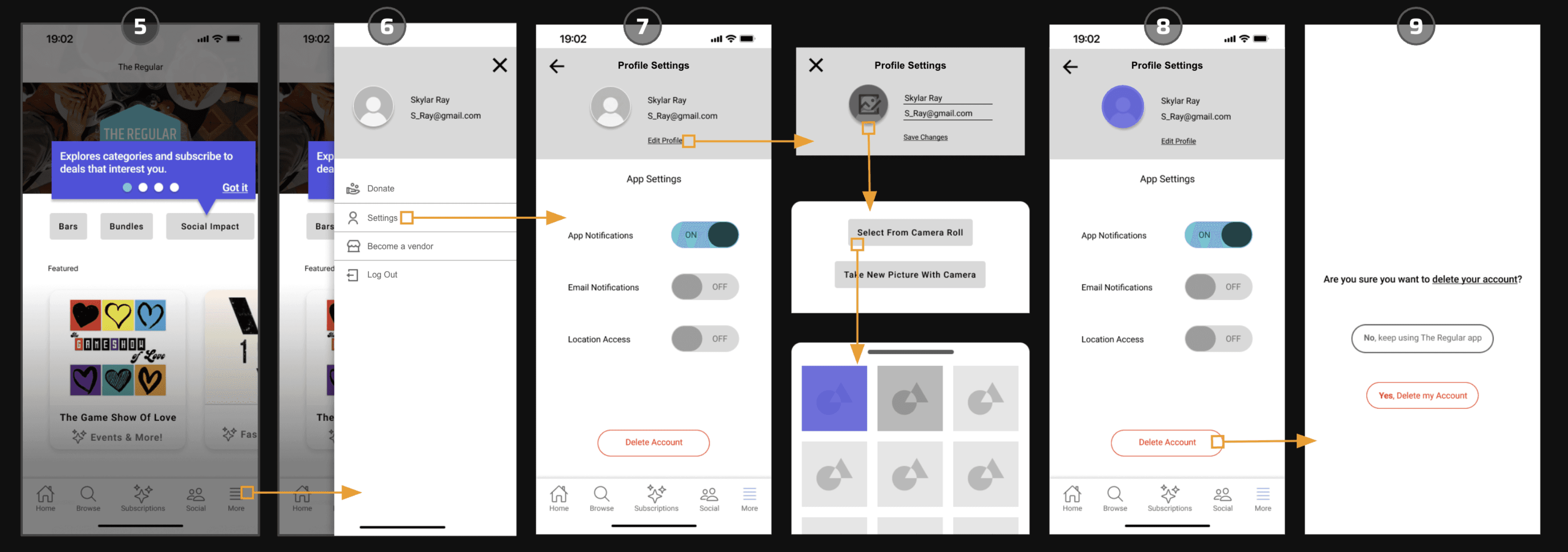
Key changes included:
A reorganized home screen to surface important content
A more accessible side menu and bottom navigation
New profile customization flow
Simplified settings screen
A clear account deletion process
Solution
What improved:
Users received a clearer introduction to what the app is for
Navigation made it easier to move between features
Membership and account information was made easier to understand
The interface was aligned with accessibility standards
Deliverables
App Structure:
Loading screen
Onboarding process
Vendor signup form *
Profile and settings options
Advanced search features *
League management *
Visual Design:
Color palette *
Iconography
Text styles & wording
[*] executed by another designer
Outcome
Together these improvements addressed the main usability issues discovered during testing and helped the product better support both consumers and vendors. By leading this process, I helped turn early user feedback into a more usable version of the platform while setting a foundation for future development.