Role
Sole Product Designer
Scope
HMI design
UX research
Interaction design
Design system
Concept
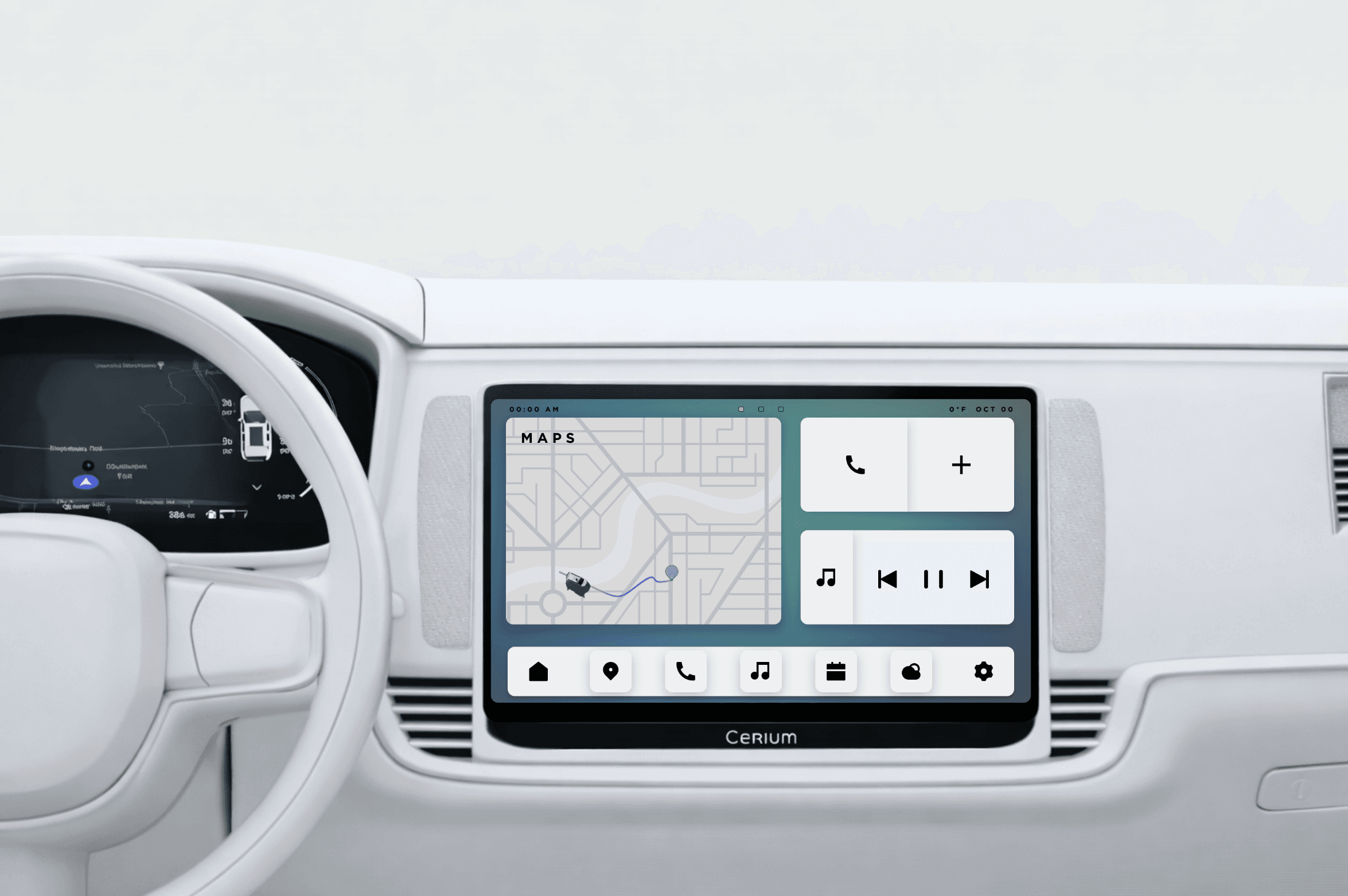
Cerium Auto is a self-initiated automotive HMI concept focused on improving how drivers interpret, navigate, and act on information while in motion.
Challenge
Current infotainment systems often force drivers to choose between usability and control. Interfaces are cluttered, buried in menus, or don't behave like the devices people are used to. The goal was to design a system that reduces distraction, improves task speed, and still gives users control over their experience.
Research
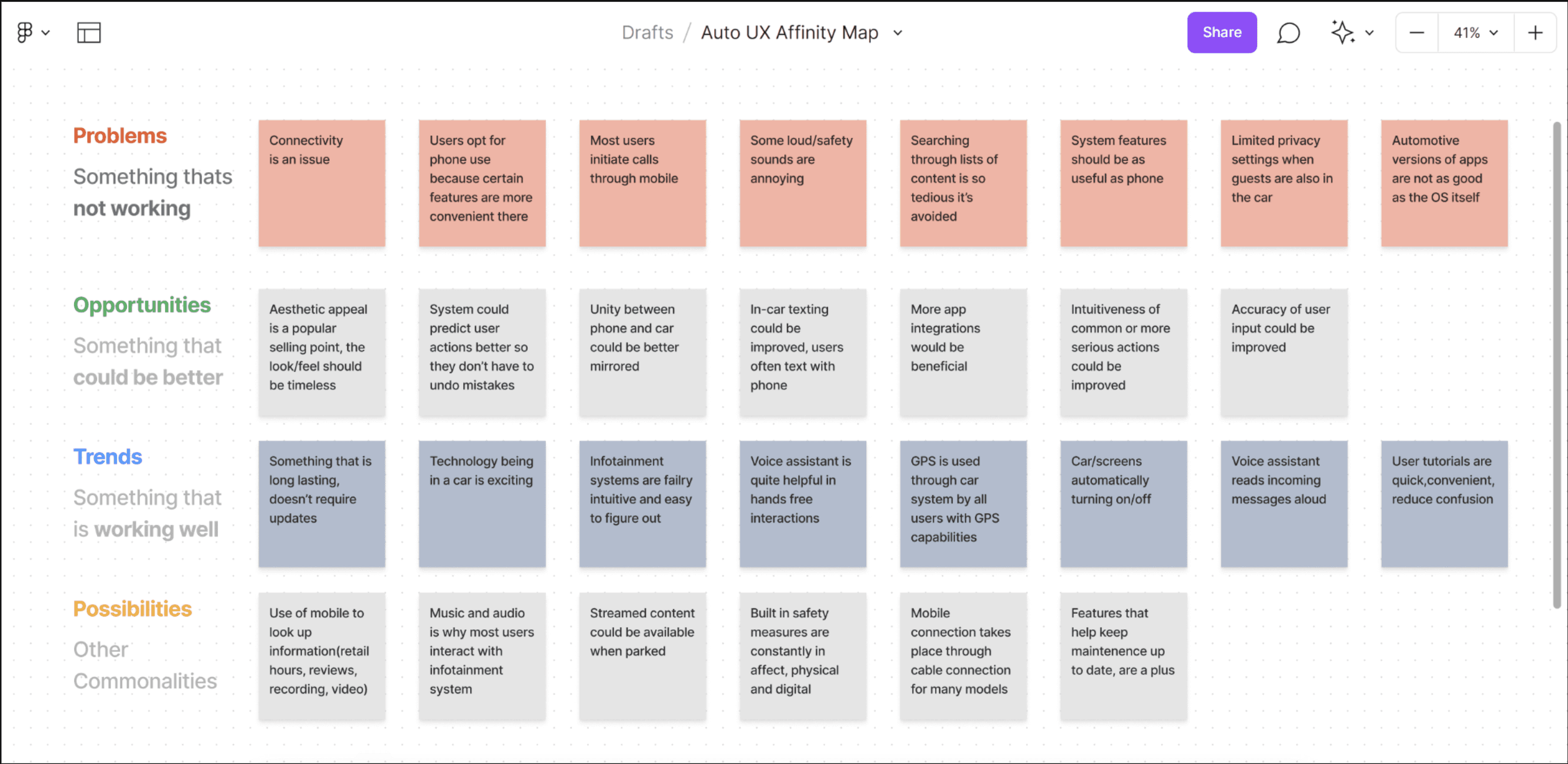
To better understand the problem space, I conducted secondary research across platforms like Tesla, Android Auto, and Apple CarPlay, then validated findings through user interviews.
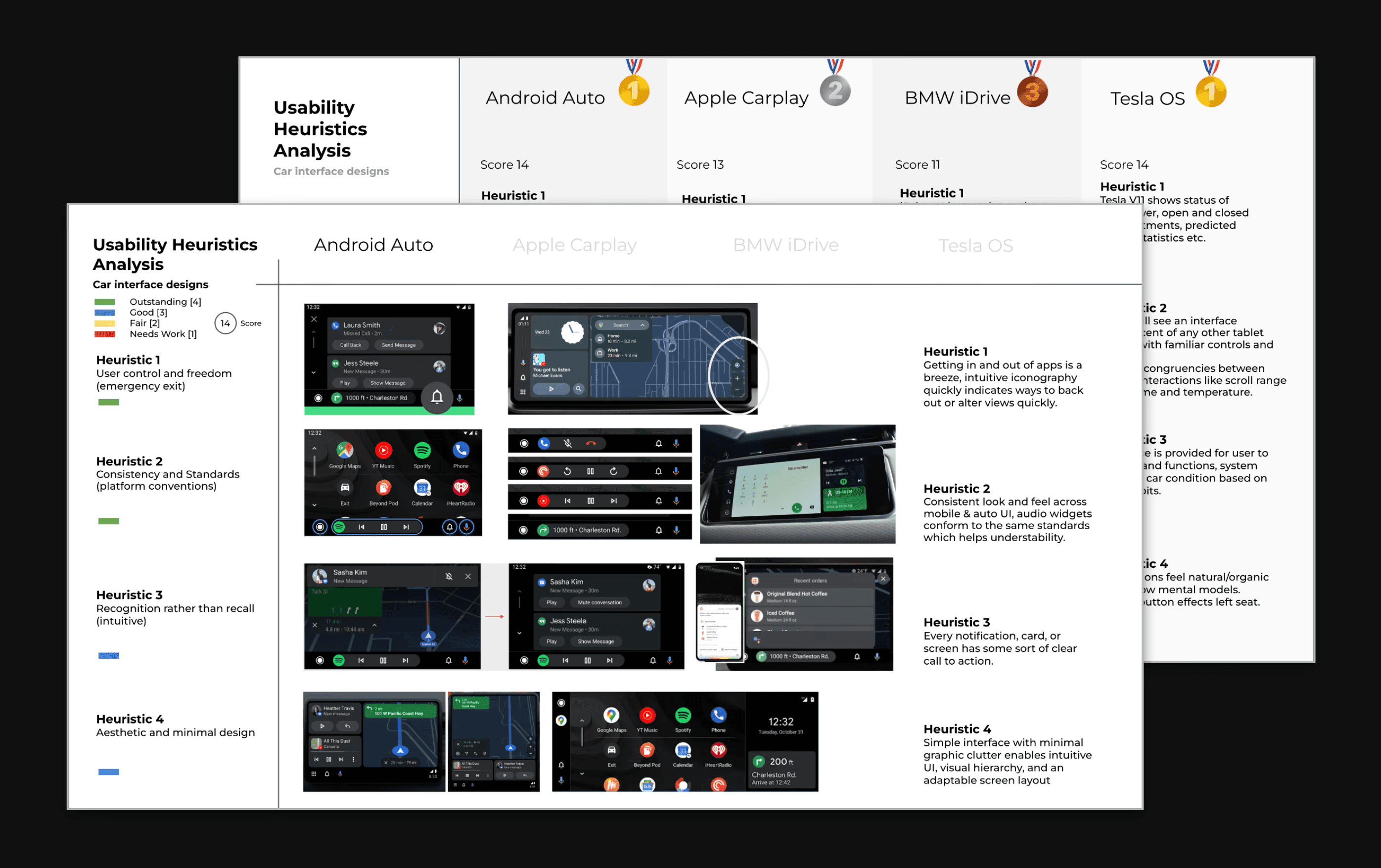
Competitive audit
Clear navigation enables quick task switching
Consistent interactions improve predictability
Recognition-based UI reduces mental effort
Minimal layouts improve readability and focus
Clear feedback and guidance decreases learning curve
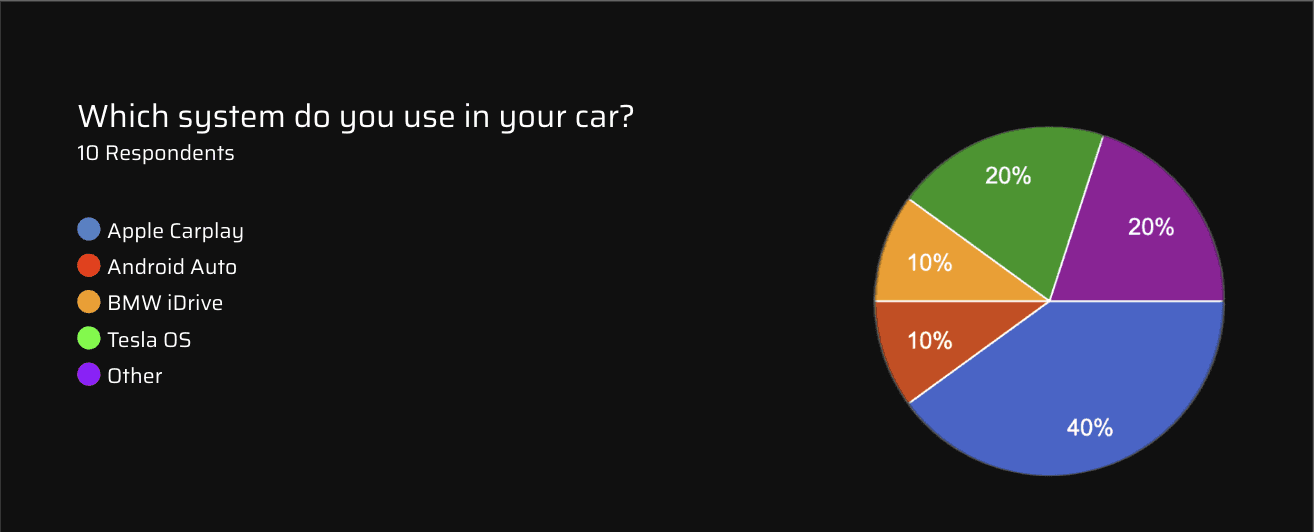
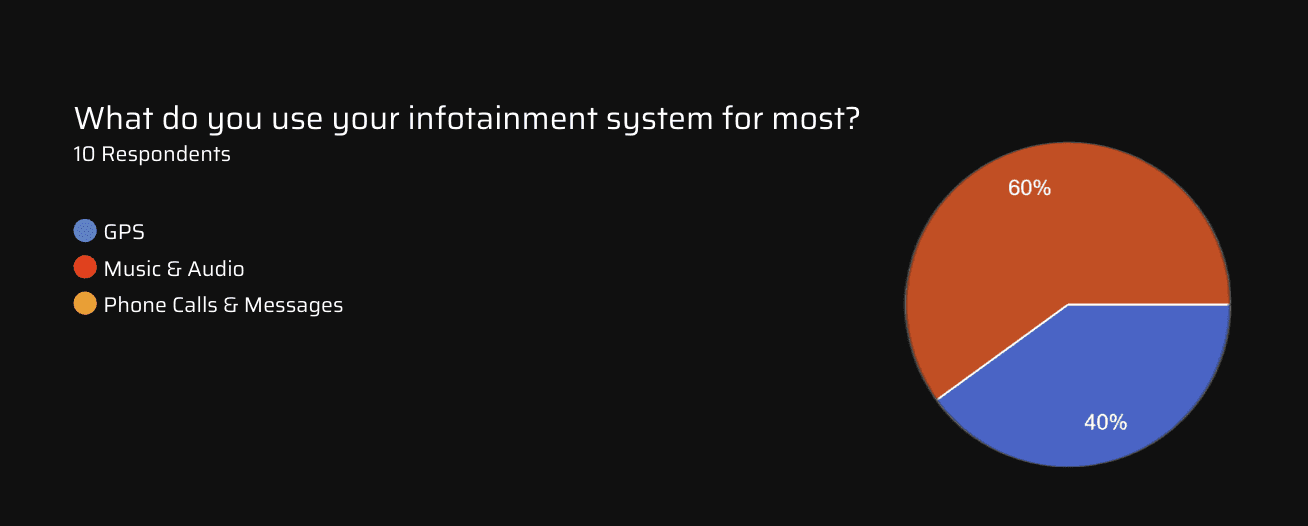
User Interviews
Drivers treat infotainment like an extension of their phone
Connected users want customization and control
Routine users want fast, familiar interactions
Maps, music, messaging, and calls are the primary actions
Strategy
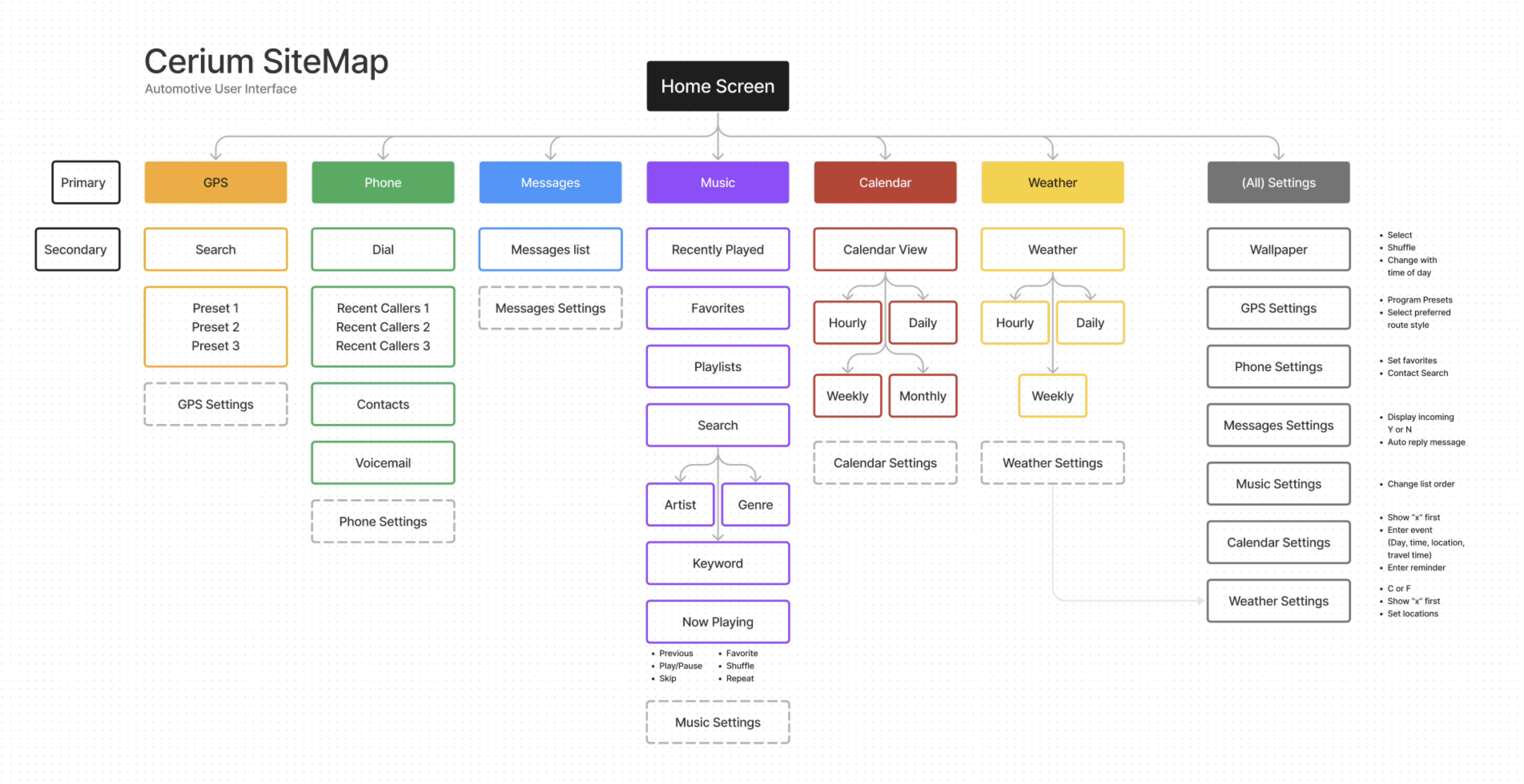
I translated insights into a simplified system architecture focused on core driving tasks.
System goals
Prioritize 4 core functions: GPS, Music, Messaging, Phone
Reduce menu depth and surface high-frequency actions
Introduce customizable profiles to adapt to different users
Design predictable navigation patterns aligned with mobile behavior
This became a system that supports both quick interactions and deeper control when needed.
Design & Testing
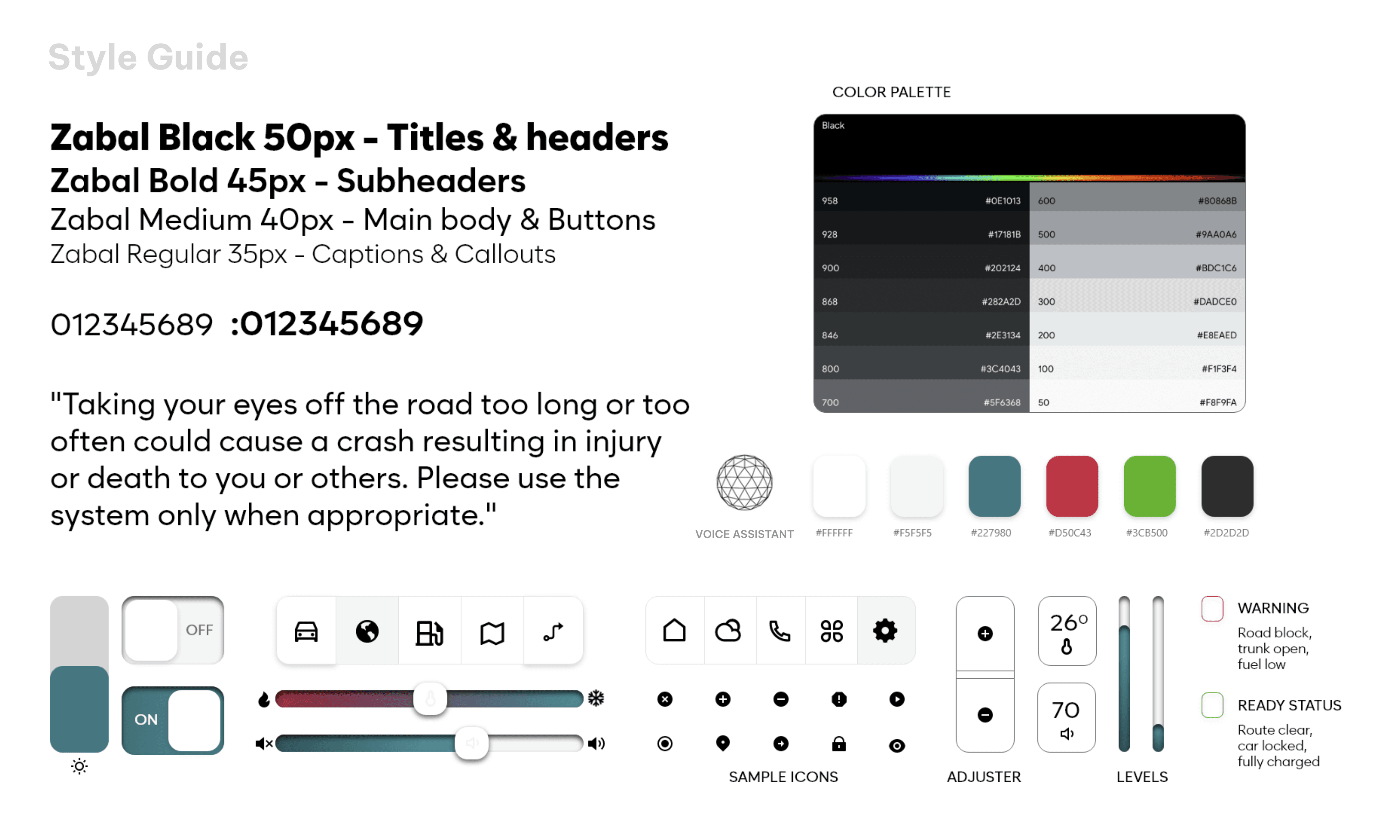
Design System
The interface was designed for readability at a glance, with large touch targets, reduced visual noise, and familiar interaction patterns adapted from mobile. The goal was not just visual simplicity, but faster comprehension and more confident task switching while driving.
Testing
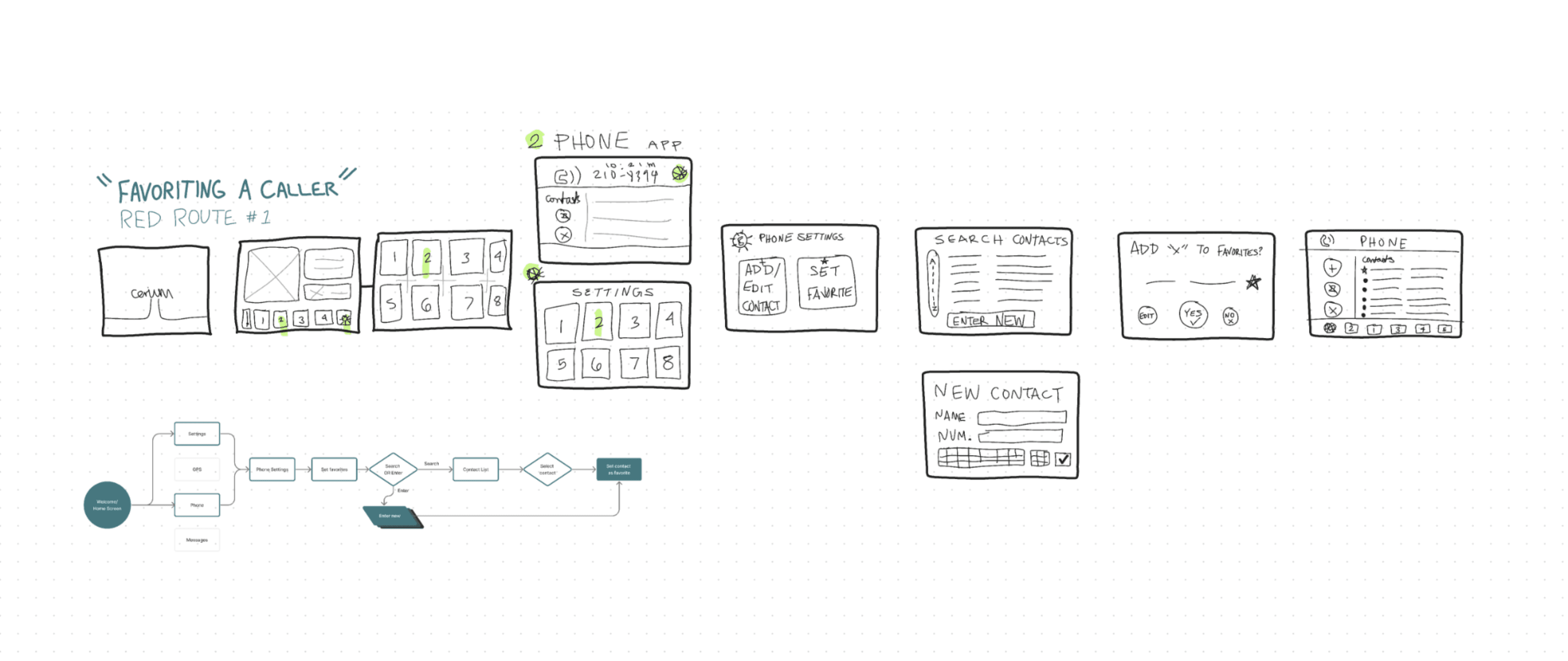
I ran three rounds of usability testing to evaluate task speed, comprehension, and navigation confidence. Iterations focused on layout hierarchy, data presentation, and interaction predictability, leading to faster task completion and stronger user confidence in the system.
Final Concept
Outcome
Cerium pushed my thinking beyond interface design into how in-vehicle systems need to behave, prioritize, and communicate under real-world conditions. It became a way to explore simplicity, control, and familiarity in a space where interaction design carries more weight.